NuThings

A field guide to the NuThings

The Stillward.

Their day begins where ours ends.
A land of rain, working hands and unfinished business.

Walk the valley ↗

A place they call home

There is a path between their houses.

The Stillward exists whether anyone dreams of it or not. Rain falls from its cliffs through woodland and gardens into the river. Things grow, wear out and need repair.

THE STILLWARDN

Choose a place on the map

Five homes. One valley.

Follow a path to discover where each traveller lives.

How the world works

Some rules cannot be wished away.

The Stillward

The NuThings come from the Stillward, a small, inhabited land gathered around a deep valley. Rain descends from its cliffs into sheltered woodland, then through gardens and a slow river. A person could spend a lifetime learning one stretch of that river without finding every crossing.

The Stillward has soil, weather, trades, arguments and things that wear out. Its residents mend leaking roofs and remember which bridge vanished in a flood. It exists independently of human dreams and feelings.

Their dawn begins when the human world enters night. Their dusk arrives with human sunrise. NuThings visit us during their day, when most human rooms have fallen quiet. During their night, they live and rest at home. This opposite rhythm belongs to the worlds; a clock cannot change it.

NuThings are small living creatures, able to sit on a human desk without covering a book. Different bodies suit different terrain. They have families, neighbours and work beyond human view.

Ordinary life

NuThings eat orchard fruit, seeds, soft roots, mushrooms and small baked cakes made from ground grain. Food is grown, traded and stored. Winter storms can spoil deliveries. They cannot live on moonlight, affection or stolen human sweets.

Their crafts are shaped by their size. They weave bark fibre, fire small clay vessels, carve fallen wood and work glass in communal furnaces. A broken pane is expensive because making another takes fuel and several skilled hands. Fine objects are repaired visibly; a good repair earns more respect than an object pretending never to have broken.

Most trade happens at the valley market through exchange and written tallies. Visitors bring useful measurements or observations from the human world, rather than whatever glittering thing they can carry. Nobody has permission to take another person's possession simply because it would look nice at home.

A year follows opening buds, high growth, seedfall and long rain. Calendars count these changes and safe crossing days. Neighbours inspect routes in the first dry spell. During long rain, the library fills with people waiting for news.

Whoever changes a map leaves the old version beside it and explains why. Travellers announce their return before telling the impressive part of their journey. Guests wash cups. At farewell, everyone knows how the other will get home.

Crossing between worlds

The oldest library route records contain crossed-out windows and later measurements written beside them. No founder's perfect map survives. The Stillward learned to cross through repeated observation, failures, rescue work and the corrections that followed.

The valley's continuing difficulty is keeping those routes dependable. During long rain, cliff paths erode, glass receivers wear and deliveries arrive late. Some neighbours want to suspend visits until every measurement has been checked; others depend on crossing work and press for new routes. Both need food, fuel and help maintaining the rainwells. The five are working residents caught in that argument, not chosen rulers. Their journeys can settle one problem while leaving another for the next season.

A crossing joins one surveyed rainwell in the Stillward to one particular window in the human world. It cannot be summoned anywhere. A window acquires a route through repeated, stable reflections: light passing over the same glass at the same angle. Physical markers can identify its receiving alignment. A pair of carved birds is one possible landmark, not a universal requirement; such ornaments have no souls or hidden powers.

At the Stillward end, a shaped glass receiver directs the rainwell's reflection. At the human end, a steady lamp or lantern completes the line through the window glass. The route can work through a closed window. Moonlight may help, but a visible moon is not required. Clouds alone do not shut every crossing.

The line must remain continuous and correctly aligned. A NuThing steps through the reflection at the water's edge and arrives at the window's receiving surface. Only small bodies and objects fit. Moving a marker does not move the route: it hides the correct alignment.

Crossing requires a clear, unobserved receiving surface. Someone watching the window directly breaks the stable reflection needed for passage. Once through, NuThings remain physically present and can be seen. They have no invisibility, memory-erasing or mind-controlling ability. If a human wakes, hiding is ordinary hiding.

Routes operate only during Stillward daylight, which is human night. Human sunrise, the Stillward's dusk, closes them until the next cycle. Missing it means sheltering safely through the human day and returning the next night. Nobody is harmed or exiled. Their family must receive word at the next crossing.

Rain, wind, a shifted lantern or water covering a marker can disturb the line. A repaired route must be tested with a small marked wooden token before anybody crosses. The token is returned from the other end to confirm the connection. A convincing-looking reflection is not enough.

NuThings cannot command weather, create light, teleport away from a closed route or repair everything by touching it. Crossing knowledge is learned work. Small errors have consequences, and asking for assistance is a normal part of competence.

Why they come here

Human rooms are full of unfamiliar scales and ingenious ordinary solutions: a hinge, a bookmark, a seed label, a drawer repaired with the wrong screw. NuThings visit to observe, learn and exchange knowledge. Some come for curiosity, some for their work, and some because a friendship began at a window.

They may move an object to protect it from immediate harm. They should leave understandable evidence: a rescued letter in a dry spot, a returned bookmark, a note. Borrowing otherwise requires permission, and returning the object is part of keeping that permission. An unattended possession is not abandoned. They do not choose human partners or cure sadness.

Humans' possessions, privacy and choices deserve respect. Children and adults contribute different knowledge; neither needs to be foolish for the other to be useful. Meeting a NuThing begins a relationship, not ownership.
Five people, not five perfect helpers

They know each other.
They disagree, too.

Morrow

Spiralwood Gardens

Morrow

“The dust stops here. Something stood in this corner.”

Builds an accurate picture of a small place by recording positions and noticing wear: a clean patch on dusty wood, an old fold, a groove left by a heavy object.

What they want. Keep a dependable record of the routes and rooms the crew uses. Be the person the others return to when everything changes.

What gets in the way. Treats an old arrangement as evidence that it should stay that way. Can quietly undo somebody else's useful change, then defend it as care.

Get to know Morrow

A low room among exposed roots, with shallow drawers built from fallen bark. Each drawer has a notch Morrow can recognise by touch.

A body with limits

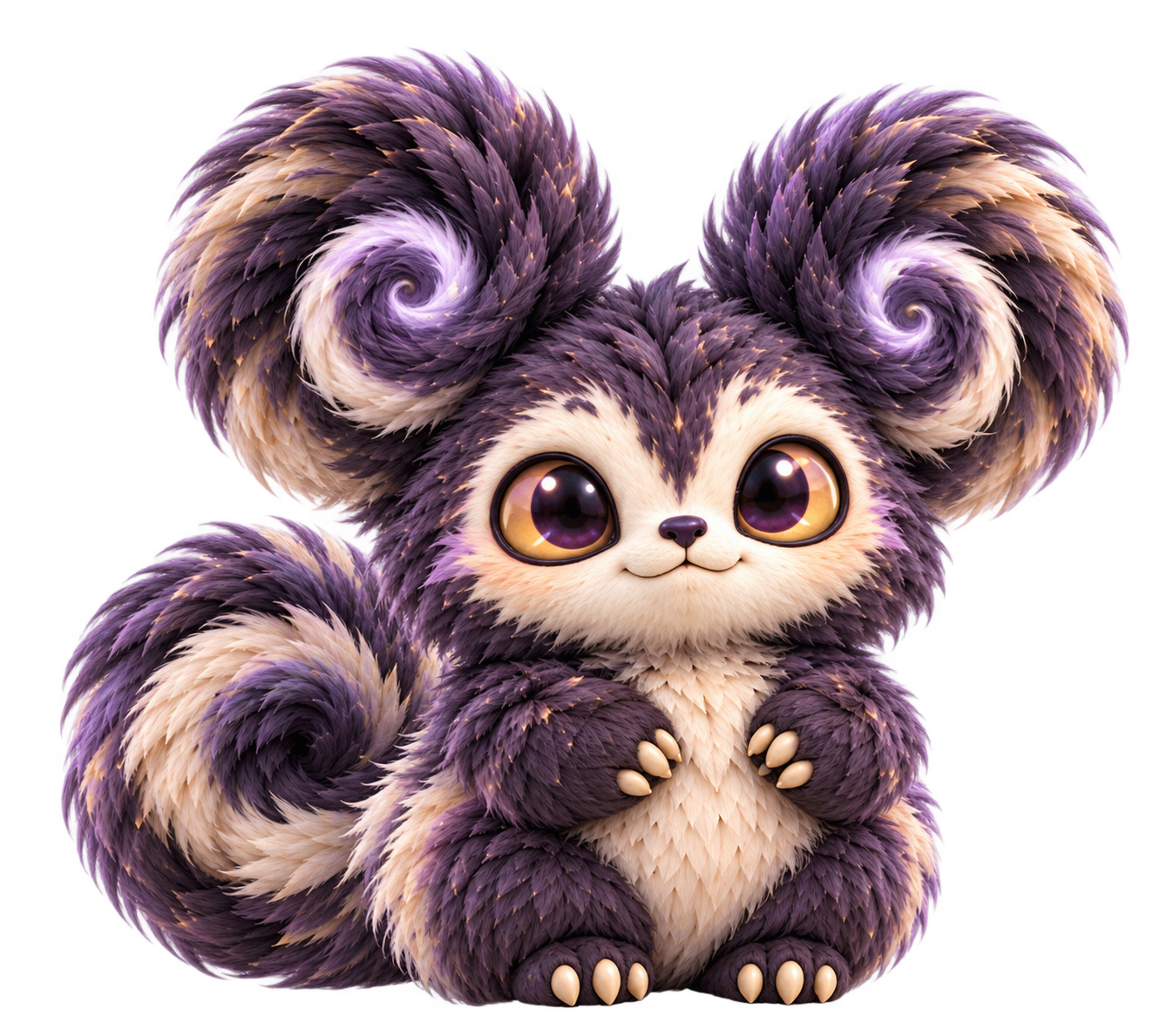
The shortest upright silhouette: a round violet body, cream face and belly, two broad spiral ears and a short curled tail.

Thick hind paws provide a steady base. Small forepaws have blunt, useful claws for lifting paper edges and nudging objects.

The ears are fleshy folds covered in fur, not rotating machinery or magical portals. They turn toward a sound; they do not spin independently.

Morrow's weight sits low. They can brace a sliding object well but cannot leap the gaps Puck clears.

Notice: Hears low scrapes and hollow knocks especially well; can compare the sound of a drawer before and after something is removed. Rain or a crowded room masks those sounds. Hearing a change does not reveal who caused it.

A private fear: Losing the way home after the familiar landmarks disappear. Morrow dislikes deep, unmarked water because no footprint remains on its surface.

Between friends

Tavi. Tavi trusts Morrow with seed records. Morrow wants tidy rows; Tavi leaves room for roots to choose their direction.

Puck. Puck brings the observations Morrow cannot gather close to home. A dramatic account is not a reliable map. Morrow makes Puck tell it twice.

Vex. Vex builds practical ways across the gaps Morrow cannot jump. Vex moves landmarks to test a route. Morrow sees the missing landmark before the better route.

Orlo. They share patience for damaged, overlooked things. Orlo wants a repaired object to shine. Morrow sometimes needs the old crack left visible as a record.

Meet Morrow in the encounter →
Tavi

Mossflower Hollows

Tavi

“Dry on top. Still wet underneath. Leave the cup.”

Stores seeds, supports bent stems, distributes water and finds the right light for a plant by close observation.

What they want. Keep a travelling seed collection alive through a whole season. Prove that leaving a sheltered place does not mean abandoning it.

What gets in the way. Offers help before asking. Can guard a weak shoot so fiercely that nobody else is allowed to learn how to care for it.

Get to know Tavi

A sheltered hollow above damp ground. Open seed trays sit on different ledges so floodwater cannot take them all at once.

A body with limits

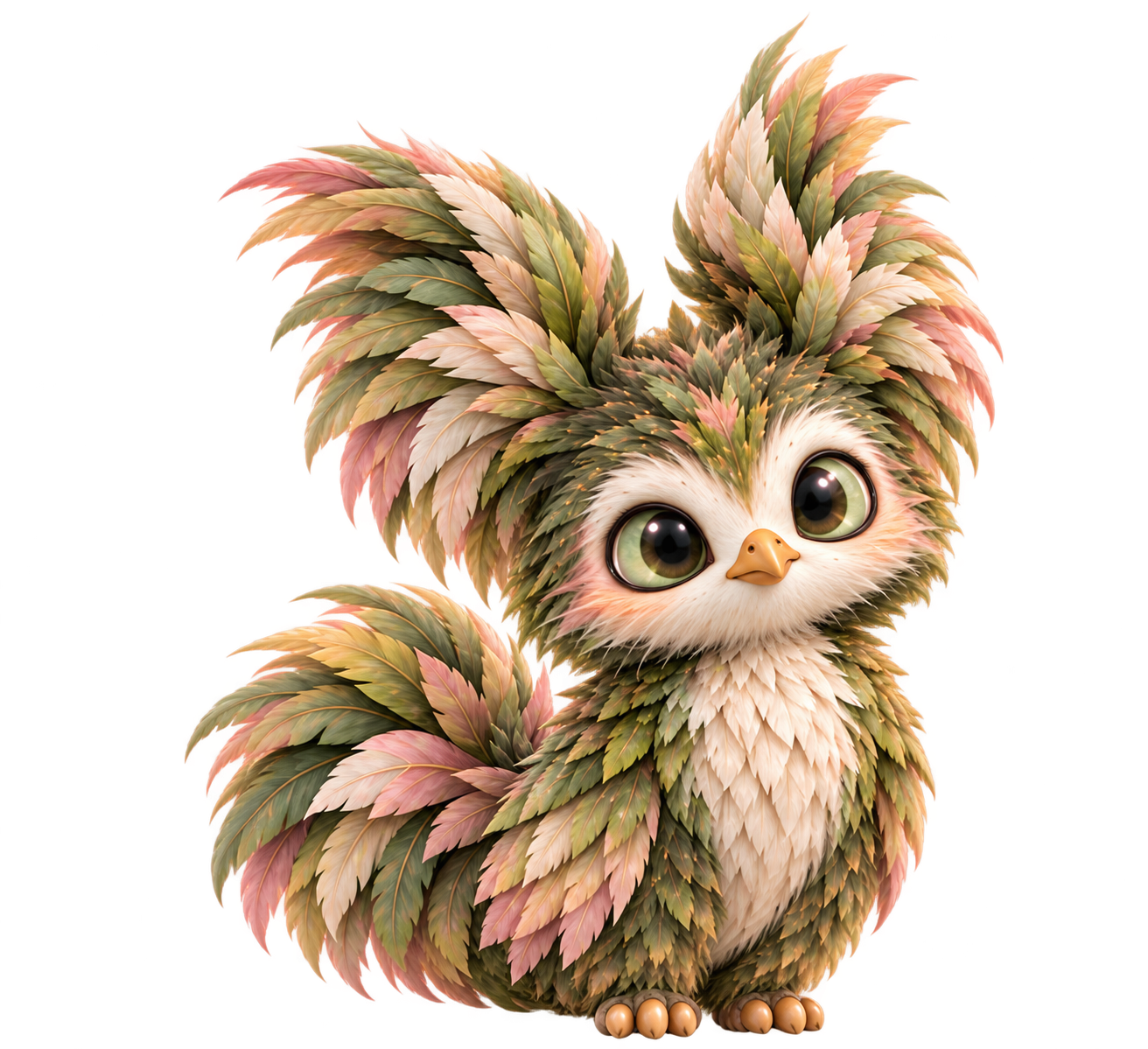
An upright olive-green and cream feathered body, a small amber beak and a broad fan tail.

Two springy hind legs support hopping. Two small forelimbs end in gripping claws beneath layered feathers.

The tail fans to steady a descent and folds tightly through branches. The forelimbs are not flight wings.

A few natural pinkish feather tips and pale face feathers distinguish Tavi from a dressed-up plant mascot. No worn leaf crown or jewellery.

Notice: Beak and claws detect subtle texture and moisture differences in familiar soil, bark and seed coats. Touch reveals conditions, not a plant's thoughts or future. Unfamiliar seeds require observation and mistakes.

A private fear: A sudden flood carrying away every seed saved from one place. Tavi also hesitates over bare ground with no nearby cover.

Between friends

Morrow. Morrow keeps dates and labels when Tavi becomes absorbed in growing. A perfect list cannot decide whether a sick plant needs another day.

Puck. Puck carries seeds and news from farther paths. Tavi packs Puck's provisions without asking. Puck hears doubt where Tavi intends care.

Vex. Vex makes drains and supports for the hollow. Vex calls a new channel a test. Tavi sees living roots in the path of its water.

Orlo. Orlo repairs the containers Tavi refuses to throw away. A beautiful pot with no drainage is a bad home. Tavi says so even when Orlo expects admiration.

Meet Tavi in the encounter →
Puck

Ribbonwood Library

Puck

“That shelf and I have an understanding. It stays there. I miss it.”

Scouts elevated routes, ties a few dependable knots and remembers the sequence of a spoken account well enough to carry it between places.

What they want. Bring back a story none of the crew has heard before. Be trusted with something serious without having to stop being funny.

What gets in the way. Changes an awkward detail to make a story land better. Sometimes a listener cannot tell which part is a joke until it matters.

Get to know Puck

A narrow resting nook between two great shelf roots, with a clear view of the passage below. Puck chooses the high route even when a stair is available.

A body with limits

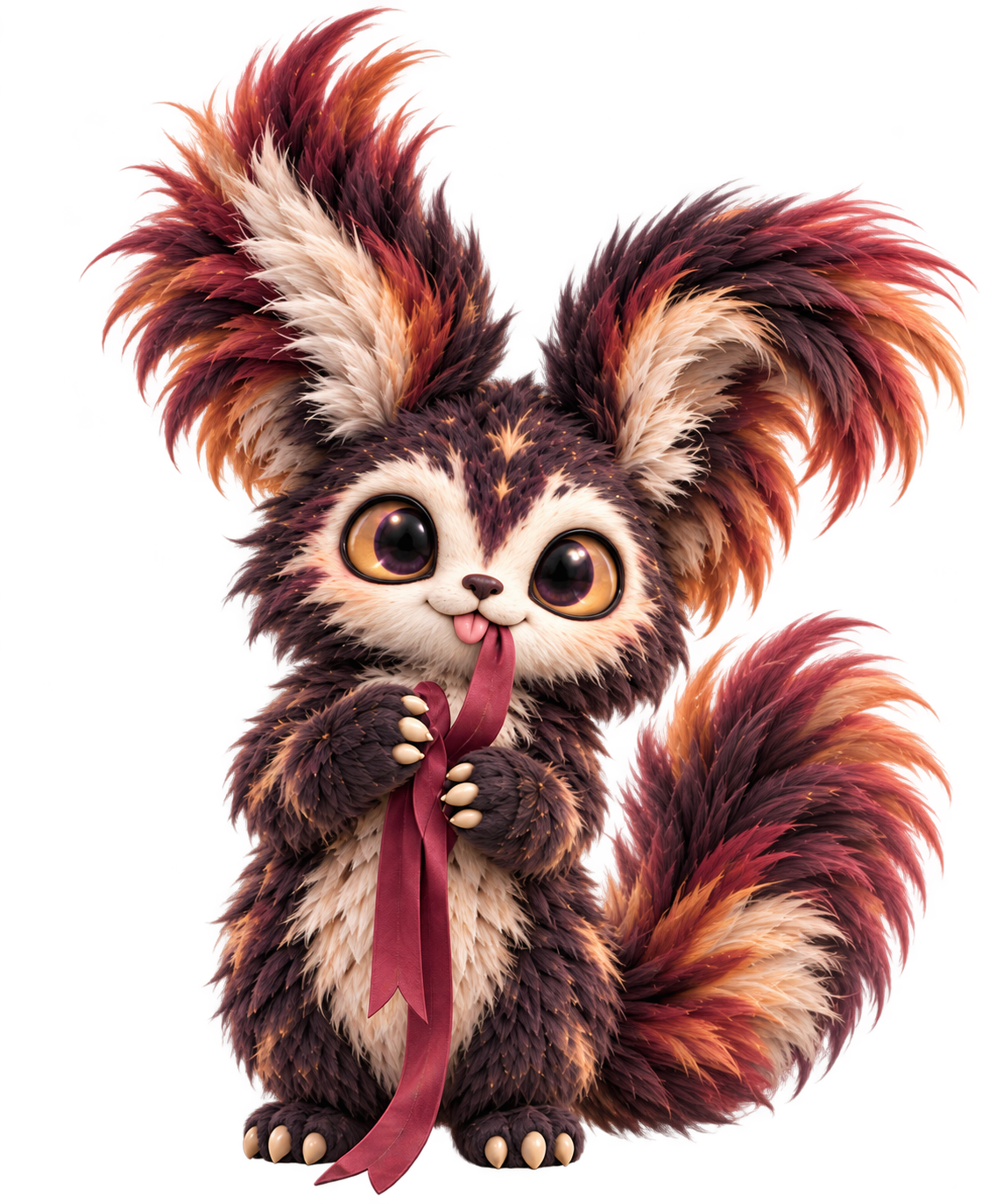
The tallest, leanest upright silhouette: burgundy and russet fur, cream muzzle, long asymmetrically tufted ears and a sweeping fox-shaped tail.

Long hind legs power a leap. Fine foreclaws can hook fabric or turn a thick page without gripping the whole book.

The tail counterbalances on narrow ledges. It cannot grip a branch or hold body weight.

When a ribbon is present, wears or carries one plain, unpatterned ribbon. No charms, stars, chains or rings are attached to it. A borrowed ribbon must go back; it is not an inseparable body feature.

Notice: Long ears distinguish direction and changing distance of light taps, especially along wooden shelves. Echoes can mislead them. Puck cannot hear through every wall or identify a speaker they have never met.

A private fear: Being trapped in a closed space with no view of an exit. Puck also fears the silence after a joke fails more than they admit.

Between friends

Morrow. Morrow is the listener Puck most wants to impress. Morrow interrupts an excellent story to ask how wide the gap was.

Tavi. Tavi always saves a dry place and something to eat. Puck wants care without an inspection of every planned route.

Vex. They find new paths together and laugh hardest at each other's bad ideas. Puck can abandon a stunt once it stops being fun; Vex may insist on finishing the experiment.

Orlo. Orlo gives a returning traveller the audience Puck enjoys. Puck borrows display objects as story props. Orlo wants them returned exactly where they were.

Meet Puck in the encounter →
Vex

Rainwell Cliffs

Vex

“Wait. Put one paw here. Feel that?”

Tests small mechanisms using wedges, levers, drainage grooves and counterweights. Spots how one changed angle might free something stuck.

What they want. Build a crossing the others can use, including those who cannot jump. Have people ask what Vex is making before telling them to stop.

What gets in the way. Acts on an interesting possibility before explaining the test. Treats a startled reaction as useful information and underestimates the cost of making someone afraid.

Get to know Vex

A shallow recess above a narrow runoff channel. Small stones mark changes in water level; scraps for experiments are kept above the highest mark.

A body with limits

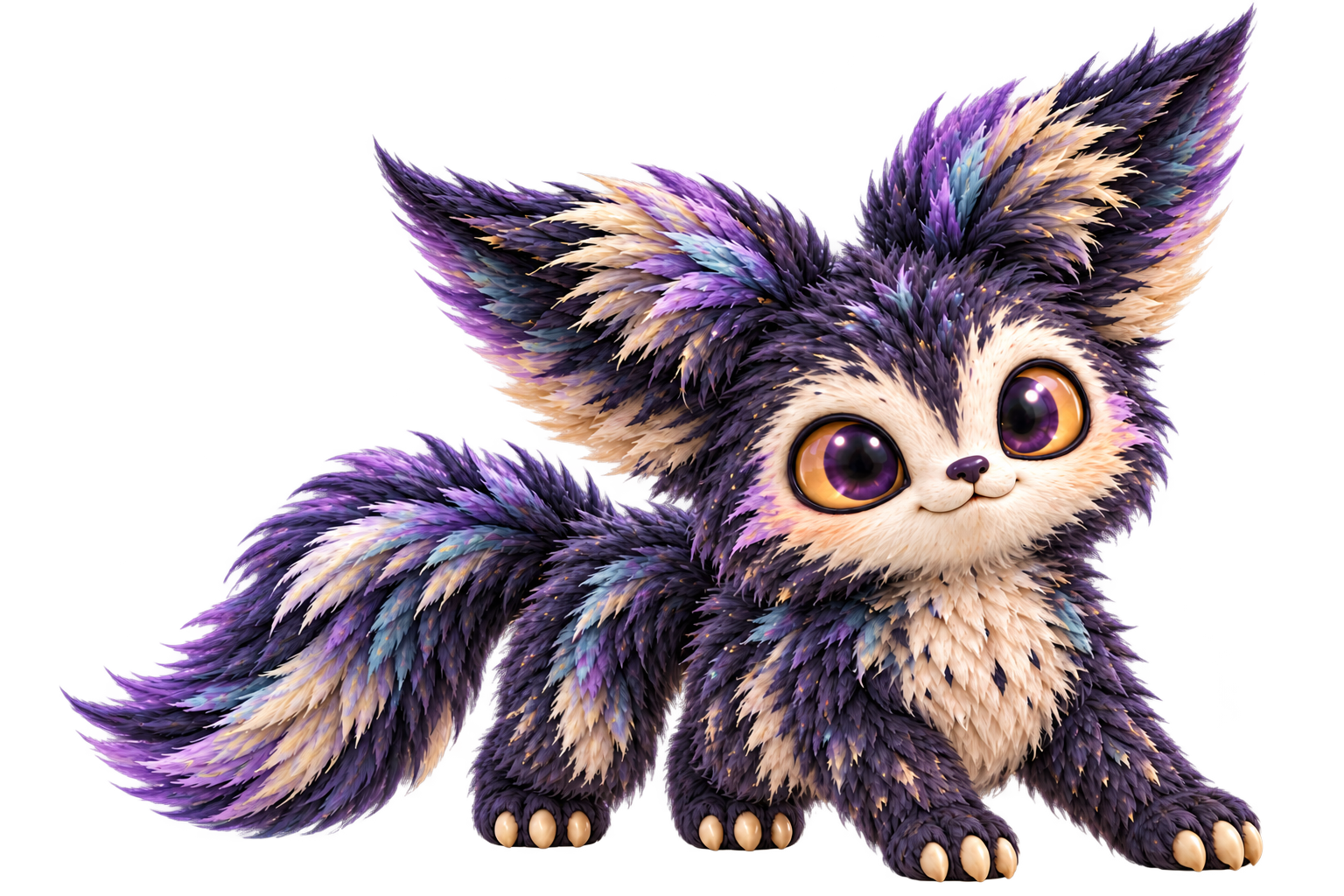
A low, agile, four-legged body in indigo and teal, a pale muzzle, wide lateral ears and a long tail ending in a tuft.

Broad forepaws brace on slippery stone. Flexible toes can pin a small tool while the muzzle or other paw moves it.

Normally stays on four legs. Vex can sit back and briefly free both forepaws, but cannot stroll upright carrying a heavy load.

No jewellery, star flecks, decorative moon patches or worn accessories.

Notice: Paw pads and jaw detect vibrations through a surface when Vex keeps still against it. Can distinguish a loose board rattling from a steady runoff pulse. Needs physical contact and a quiet moment. Cannot sense through open air or predict a storm.

A private fear: A mechanism giving way while somebody else relies on it. Vex hides this fear by testing alone, which can create its own danger.

Between friends

Morrow. Morrow's observations catch mistakes Vex misses. Vex resents being judged before a new arrangement has been tried.

Tavi. Tavi supplies fibres and knows which roots must remain untouched. Vex forgets that a drain can save one place by flooding another.

Puck. Puck will explore the far end of a route nobody else can reach. Vex sometimes mistakes Puck's bravado for informed consent.

Orlo. Orlo finishes and fits parts that Vex leaves rough. Vex thinks a useful repair may be ugly. Orlo thinks an exposed sharp edge means it is unfinished.

Meet Vex in the encounter →
Orlo

Blossomglass Gardens

Orlo

“A moment. You are admiring the wrong side.”

Fits fragments, smooths a rough edge, ties a clean binding and repairs small objects with suitable paste, fibre or a fitted brace.

What they want. Repair a garden object people assumed was beyond saving. Be remembered for making something useful, not merely making it look charming.

What gets in the way. Makes a ceremony of presenting a repair, then takes a quiet response personally. May keep somebody else's object on display a little too long.

Get to know Orlo

A sheltered alcove beside a reflecting pool, with a low workbench for fitting broken garden ornaments. Finished work is placed where people will pass it.

A body with limits

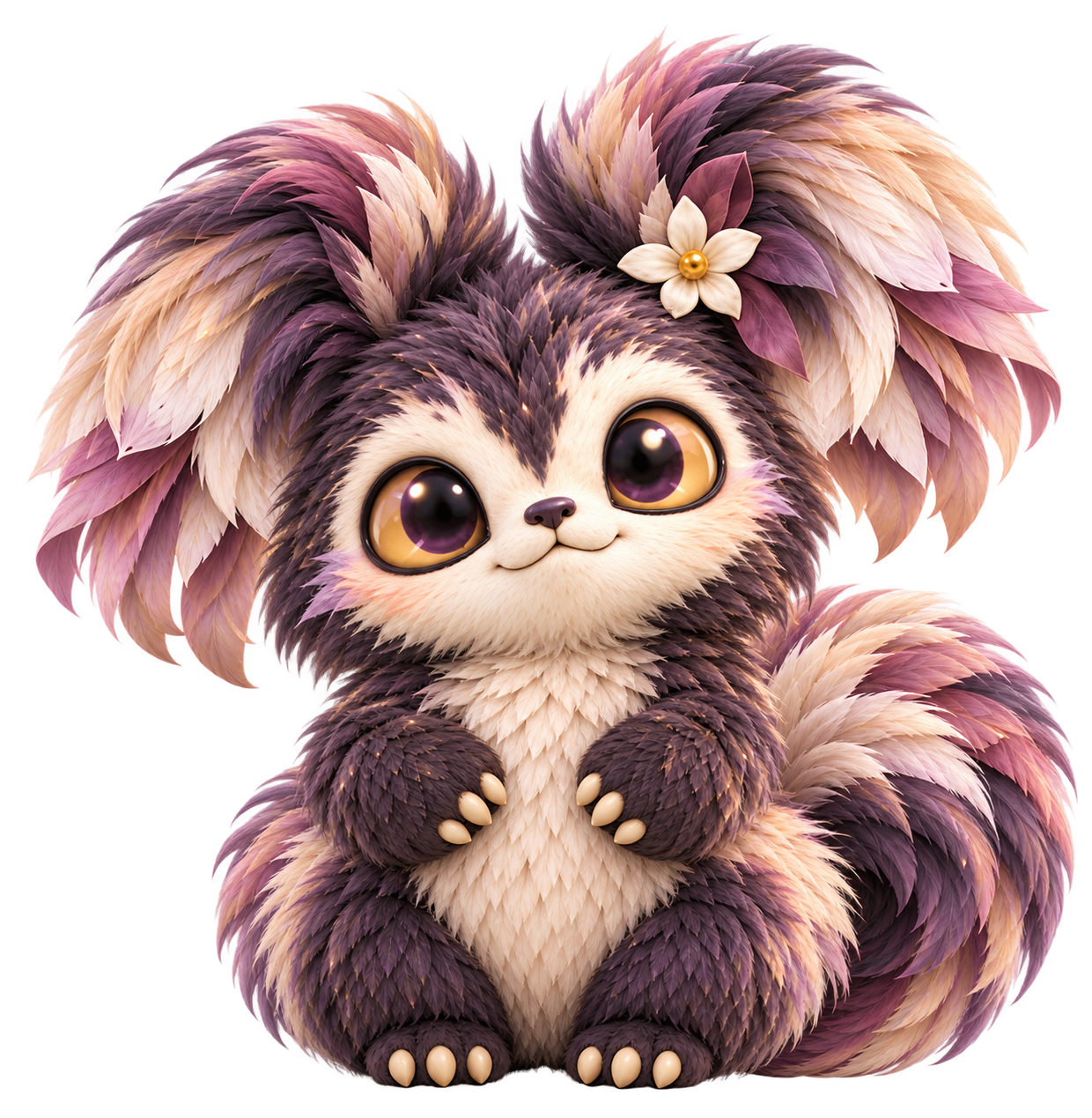
A pear-shaped body with mauve and deep plum fur, a pale face and belly, and long soft ears that droop beside the cheeks.

A broad seated base and short hind legs favour steady work over speed. Small forepaws have unusually precise fingertip pads.

A soft, modest tail rests behind the body rather than becoming another enormous display feature.

Wears one small cream flower near an ear. No necklaces, rings, chains or additional blossoms decorate the body.

Notice: Sensitive fingertip pads distinguish the edges, grain and surface texture of small fragments. Orlo can often feel a correct fit before seeing it clearly. Matching texture is evidence, not proof of ownership. Sharp edges still cut; some pieces are too small or worn to identify.

A private fear: A carefully repaired object being discarded because the join still shows. Orlo sometimes conceals a crack instead of admitting what the repair can bear.

Between friends

Morrow. Morrow helps establish where a fragment came from. Morrow may ask Orlo to preserve damage as evidence rather than hide it.

Tavi. Tavi knows which fibres bend and which natural pastes hold. Tavi values the pot's drainage over its finished appearance and says so plainly.

Puck. Puck gives Orlo's work a lively story and an appreciative audience. Puck wants to borrow it before the join has cured. Orlo must say no without turning it into a performance.

Vex. Vex explains the forces a repair must withstand. Orlo can polish away a useful grip; Vex can leave a practical object needlessly uncomfortable.

Meet Orlo in the encounter →

Their first story

Must Be Nothing

Your bookmark moves. Puck calls it a routine binding inspection. Vex has an explanation for the pen. You were trying to draw a boat; neither of them thought to ask.

Read the complete tale ↗Or meet them at your desk →